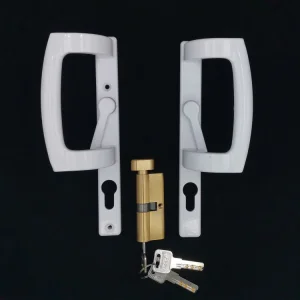
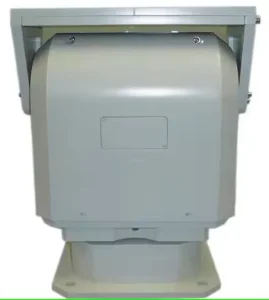
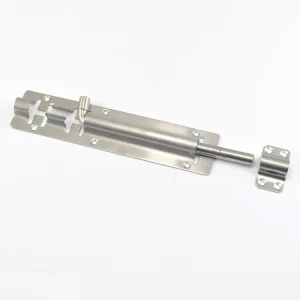
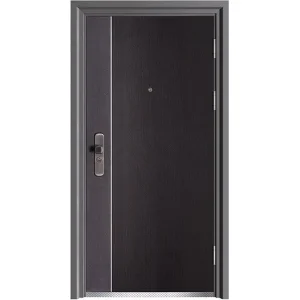
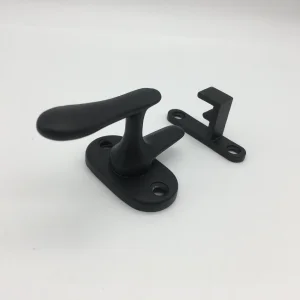
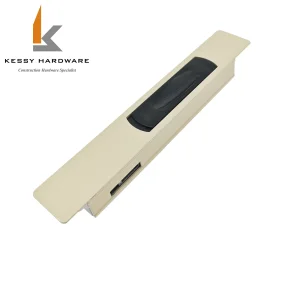
Featured Industrial Locking & Architectural Accessories
Strategic Sourcing Analysis & Industry Standards
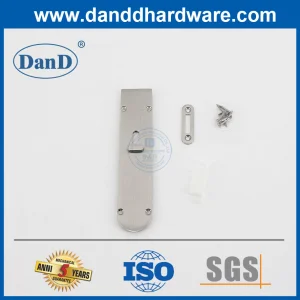
In B2B industrial hardware procurement, barrel bolts—also commonly referred to as tower bolts or slide locks—constitute a fundamental class of mechanical security fasteners. They serve as primary or secondary security mechanisms across diverse architectural installations, fenestration projects, marine crafts, and heavy industrial machinery. When sourcing at scale, global procurement officers must evaluate manufacturers based on metallurgical expertise, structural compliance (such as EN or ASTM certifications), dimensional tolerance controls, and supply chain reliability.
The manufacturing market for barrel bolts is highly stratified. High-end architectural and industrial demands are typically met by specialized factories in China, Germany, and Italy, utilizing progressive die stamping, automatic hot forging, and advanced electroplating finishes. Among the globally recognized clusters, Jiangsu Province, China, has emerged as a premier hub for high-volume, precision-engineered metal products, combining robust downstream supply chains with state-of-the-art automation. Factories in this region offer critical advantages in customizing backset depths (ranging from 7.5mm to 35mm), overall throw lengths, and heavy-duty structural designs tailored to wind-load and physical security parameters.
Optimal wear resistance requires high-grade materials: AISI 304 or 316 Stainless Steel for corrosive environments, solid extruded brass for architectural installations, and structural hot-rolled carbon steel for heavy industrial container hardware.
Anti-corrosion integrity measured via ASTM B117 salt spray testing. High-grade units undergo trivalent zinc plating (Cr3+) or physical vapor deposition (PVD) to withstand 240+ hours without white rust formation.
Cycle testing verified in compliance with EN 12209 and BHMA standards. Premium industrial barrel bolts are rated for upwards of 200,000 mechanical operations under load.
Jiangsu Jefort Hardware Manufacturing Co., Ltd.
Since its establishment in 2018, Jiangsu Jefort Hardware Manufacturing Co., Ltd. has rapidly established itself as a professional hardware manufacturer, becoming a leading supplier of hardware door and window accessories. Leveraging its solid production capabilities and precise market positioning, the company has grown into a premium supplier of hardware door and window accessories.
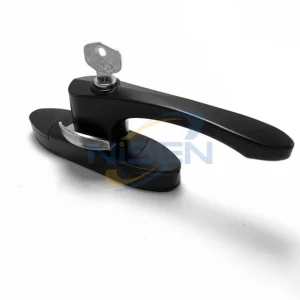
Our company focuses on core needs, meticulously crafting three core categories of products: UPVC, stainless steel, and steel door and window espag rods and bolts. These products not only meet the needs of doors and windows made of various materials, but also rigorously control quality. From raw material selection to production and processing, high standards are adhered to every step of the process, ensuring excellent durability, stability, and adaptability. These products can meet the needs of various door and window manufacturing scenarios and provide reliable accessory support for downstream customers.

Customization Capability & Fast Prototype Cycle
We support personalized requirements such as backset (7.5mm-35mm), length, color, and packaging. We can quickly produce customized solutions based on customer door and window profile samples and drawings, with a sample production cycle of just 3-5 business days.

Product Application
Door and window hardware

Production Equipment
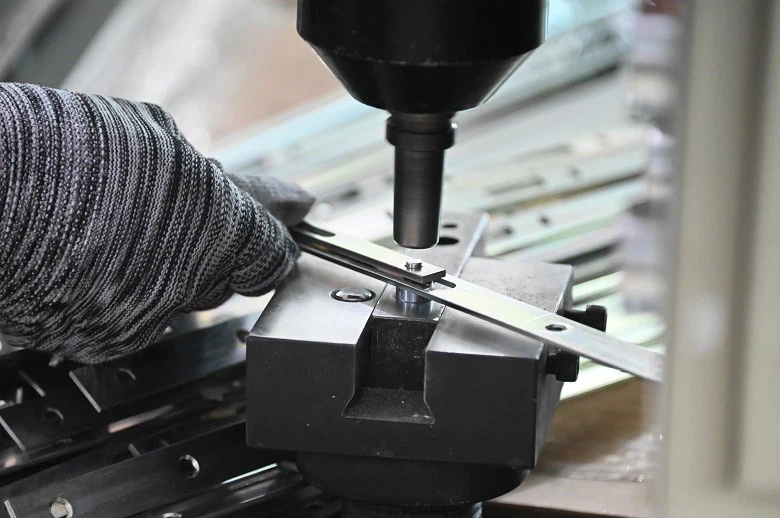
Automatic stamping machine Automatic riveting machine

Production Market
Uzbekistan, Libya, Argentina and other Middle Eastern and Latin American countries

Our Service
Fully automatic stamping with a daily production capacity of 12,000 pieces
Technical Breakthroughs in Hardware Production
Jiangsu Jefort Hardware Manufacturing Co., Ltd. embodies the transition toward advanced Industry 4.0 protocols in East China's metal fabrication sector. By integrating automated stamping matrices and computer-controlled riveting systems, the factory has eliminated human error and structural misalignment during metalforming stages. Heavy-duty steel and stainless steel espag rods are stamped using multi-cavity progressive dies that maintain consistent shear dimensions and minimize edge burrs. This high-efficiency engineering setup drives a daily throughput of 12,000 premium components.
In addition to robotic metalforming, supply chain resilience is anchored in our direct alignment with steel mills and local alloy refineries in Jiangsu. This guarantees trace-certified material grades and provides price-shielding mechanisms against raw steel volatility. For international buyers, particularly in volatile markets across the Middle East, Latin America, and North Africa, Jefort’s dual-source metal pipeline ensures order fulfillment stability even during peak seasonal demands.
Spectral analysis of raw stainless steel and carbon coils to verify chemical composition before stamping.
Automated progressive stampers format the plates and base guides with micro-millimeter tolerance control.
High-pressure hydraulic riveting aligns the locking pin with the base track, ensuring zero horizontal wobble.
Fatigue tester runs random batch samples through continuous compression and pull-apart shear stress tests.
The Evolution of Slide Locking Mechanisms
The architectural hardware sector is undergoing a massive convergence with IoT and home security automation. The classic mechanical barrel bolt, once considered a low-tech component, is being re-engineered for smart building compatibility. The Jefort research and development roadmap focuses on incorporating hybrid electro-mechanical latches that interface with digital smart locks. These hybrid units retain the robust manual physical lock of a steel bolt while utilizing built-in sensor arrays to feed lock-status data (engaged/disengaged) directly into building management software.
Furthermore, metallurgy is advancing toward ultra-lightweight composite matrices. While pure steel and brass remain the standards for physical barrier strength, architectural projects require surface treatments that match modern color palates like matte black, oil-rubbed bronze, and anodized graphite. The transition to high-adhesion PVD (Physical Vapor Deposition) and environment-friendly trivalent chrome plating (Cr3+) represents the future of architectural hardware coating, ensuring zero heavy-metal leaching and meeting the strict environmental mandates of North American and European green building initiatives.
Custom Deployments Across Industrial Segments
Providing customized backsets (7.5mm to 35mm) specifically tailored for modern UPVC profiles, multi-point lock integration, and casement configurations that withstand severe coastal wind loads.
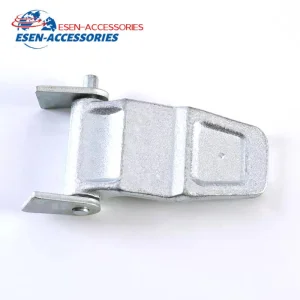
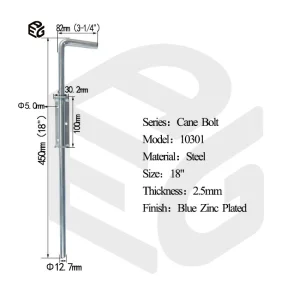
Heavy-duty steel cane bolts and hot-dip galvanized hinges designed to secure heavy container doors, warehouse gates, and mobile industrial platforms under severe vibrational stresses.
Localized design packaging, custom color powder coating, and specialized tooling based on blueprint profiles, shipping directly to distributors across Latin America and the Middle East.
Certifications for International Sourcing Teams
Navigating different trade policies and custom duties is a major bottleneck in global B2B procurement. As a mature exporter supplying markets from Uzbekistan to Argentina, Jefort has standardized its customs clearance protocols, providing pre-validated HS classification codes, origin documentation, and local compliance support. Our manufacturing processes are fully compliant with RoHS and REACH chemical regulations, ensuring that all zinc alloys, brass plating, and surface finishes contain no hazardous heavy metals or prohibited toxic chemicals.
Moreover, architectural certifications such as the CE mark (Europe) and ANSI/BHMA Grade 1 to Grade 3 (Americas) are critical for major municipal bids. Our structural engineering team works closely with external testing authorities to provide load test certifications, wind-resistance calculations, and fire safety ratings. Sourcing teams can rest assured that every barrel bolt supplied will seamlessly pass regional code evaluations, preventing construction delays and compliance fines.
Strategic Checklist for Procurement Managers
To assist procurement managers, Jefort’s quality engineering department has outlined the following checklist to evaluate structural integrity and operational life when selecting a bulk hardware manufacturer:
Axial play in the bolt path should not exceed 0.2mm. Standardizing on low tolerances prevents rattle under strong winds and protects the locking mechanism from being pried or jimmied.
Heavy-duty bolts must be rated for at least 3,500 N of shear load force before failure, securing structures against forced intrusion or violent environmental impacts.
Confirm the factory’s raw material stockpiles. Jefort maintains a 10-day buffer supply of structural coil steel, reducing order lead times to 3-4 weeks for volume containers.
B2B Sourcing & Technical Solutions Clarified
Precision Engineering & Architectural Locking Accessories
 Jefort Hardware