How to Weatherproof the Best Door and Window Hardware from China?

Time:2026-10-25 Author:Charlotte
0%

Choosing the best door and window hardware from China requires more than comparing prices or polished product photos. Real performance depends on materials, surface treatment, design, assembly, and climate exposure. A handle that survives a dry warehouse may corrode quickly beside a coastal home. Small details matter.

This guide explains How to weatherproof door and window hardware through practical sourcing and quality-control steps. Experienced buyers should examine stainless steel grades, aluminum alloys, zinc finishes, seals, drainage paths, and fastener compatibility. Ask suppliers for material certificates, coating specifications, salt-spray results, and production samples. Independent laboratory testing can provide stronger evidence than a supplier’s marketing claims. Still, test results must match the intended environment and installation method.

Weatherproofing is not only a factory responsibility. Correct storage, careful installation, and regular inspection affect service life. A scratched finish near a screw hole can become a starting point for rust. Poorly sealed joints may allow water behind the frame. Even excellent hardware can fail when installed with incompatible fasteners or excessive force. Mistakes happen, especially when drawings are unclear. That is why approved samples, written tolerances, and clear inspection photographs remain valuable.

No coating lasts forever. This is easy to forget. Buyers should consider local humidity, sunlight, temperature changes, airborne salt, and cleaning chemicals before approving an order. Reliable Chinese manufacturers can support this process with traceable production records, consistent sampling, and responsive technical communication. The goal is not to promise perfect hardware. It is to reduce predictable failure and choose components that perform honestly in their real operating conditions.
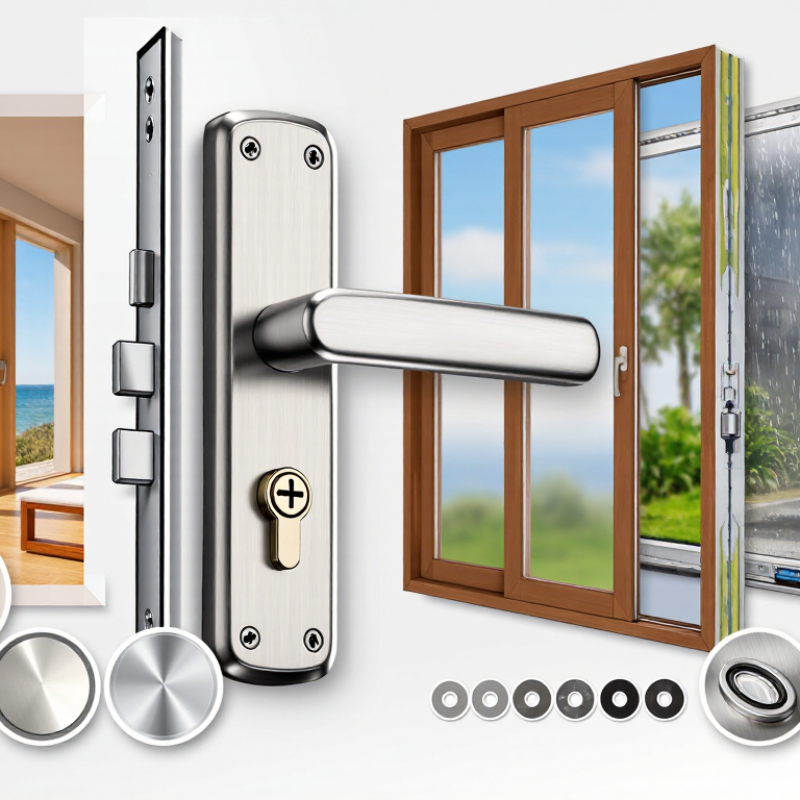
How to Weatherproof the Best Door and Window Hardware from China?

Define Weatherproof Door and Window Hardware Requirements

How to Weatherproof the Best Door and Window Hardware from China?

Define Weatherproof Door and Window Hardware Requirements

Start with the building’s actual exposure, not a supplier’s product description. Record wind-driven rain, coastal salt, winter temperatures, sunlight, and daily opening cycles. A seaside apartment needs stronger corrosion resistance than an inland office. Small differences matter.

Specify the door or window weight, frame material, hardware load, and installation direction. Define acceptable air leakage, water penetration, operating force, and security performance. Ask for test reports with standards, test dates, sample details, and laboratory information. Vague claims are not enough.

Check the Finish Carefully

Look for sealed drainage paths, protected springs, stainless or corrosion-resistant parts, and compatible fasteners. Aluminum, steel, and treated surfaces can react when moisture remains trapped. Request production samples before placing a large order. Test them after salt spray, repeated operation, and temperature changes.

Use a Written Inspection Checklist

Measure coating thickness, screw quality, alignment, gasket compression, and packaging protection. I once underestimated condensation around a cold frame, and the early sample passed outdoor testing but failed after repeated winter cycles. That mistake changed our requirements. Weatherproofing is not only about hardware; installation gaps, sealant choice, and maintenance access also affect performance. Supplier communication can be imperfect, so drawings and photographs should confirm every critical dimension.

Select Reliable Chinese Hardware Materials and Surface Treatments

How to Weatherproof the Best Door and Window Hardware from China?

Reliable weatherproofing starts with the base metal, not the catalogue photograph. For humid or coastal projects, request stainless steel hardware with documented grades, preferably 316 where chloride exposure is severe. Aluminum components should have stable alloy specifications and controlled anodizing thickness. Zinc die-cast parts can perform well indoors, but exposed applications need stronger protective systems. The NACE IMPACT study estimated annual corrosion costs at US$2.5 trillion, equal to about 3.4% of global GDP. Material selection is not a small purchasing detail.

Surface treatment deserves equal scrutiny. Anodizing protects aluminum through an oxide layer, while powder coating adds a tougher decorative barrier. Electrophoretic coating can improve coverage around complex shapes. Ask Chinese suppliers for coating thickness, adhesion results, color tolerances, and batch inspection records. ISO 9227 salt-spray testing is useful for comparison, but it does not predict exact outdoor service life. That is often misunderstood. A supplier may report 500 hours, yet poor drainage can still create rust around a screw head.

Inspect the hardware as it will be installed. Check stainless fasteners against aluminum frames, because galvanic corrosion may appear at hidden contact points. Look for sealed joints, smooth corners, and drainage paths around hinges and handles. Request test samples before mass production, then expose them to local humidity, salt, and temperature changes. In my experience, small scratches around cut edges cause disproportionate failures. We also sometimes overtrust laboratory numbers. Field verification remains necessary, especially when Chinese hardware will face coastal wind, rain, and repeated operation.

How to Weatherproof the Best Door and Window Hardware from China? - Select Reliable Chinese Hardware Materials and Surface Treatments

Hardware Material Typical Door or Window Components Weather-Resistance Characteristics Recommended Surface Treatment Suitable Exposure Selection Notes
Stainless steel 304 Hinges, handles, screws, rollers, brackets Good general corrosion resistance because of its chromium-rich passive film; suitable for most inland and urban environments. Brushed, polished, electropolished, or passivated finish Interior, residential exterior, and moderate urban exposure Check that fasteners, springs, and concealed parts are also corrosion-resistant; dissimilar-metal contact should be isolated where necessary.
Stainless steel 316 or 316L Coastal handles, exposed hinges, locks, screws, and marine-facing fittings Higher resistance to chloride-induced pitting than 304 due to molybdenum content; not completely immune to salt attack. Passivation, electropolishing, or controlled mechanical polishing Coastal, high-humidity, and salt-spray environments Use compatible washers and fasteners. Regular freshwater cleaning is still required in marine locations.
Aluminum alloy Window handles, tracks, frames, thresholds, and lightweight fittings Naturally forms a protective oxide layer; vulnerable to pitting and galvanic corrosion when exposed to chlorides or incompatible metals. Anodizing typically around 10–25 μm for architectural applications, or powder coating General exterior use, especially where low weight is important Use non-corrosive separators, drainage paths, and suitable fasteners to reduce galvanic corrosion.
Zinc alloy die casting Decorative handles, escutcheons, lock bodies, and interior fittings Good dimensional accuracy and appearance, but exposed unprotected zinc alloy can develop white corrosion products in moisture. Nickel-chrome plating, electrophoretic coating, powder coating, or multi-layer protective finishing Interior and sheltered exterior locations Specify coating adhesion, porosity control, edge coverage, and corrosion testing rather than relying on appearance alone.
Brass Handles, cylinders, escutcheons, hinges, and decorative hardware Generally durable and corrosion-resistant, but can tarnish, dezincify, or suffer stress-corrosion problems under certain chemical and marine conditions. Clear protective lacquer, electroplating, or controlled polishing Interior, sheltered exterior, and decorative applications Confirm alloy composition and finish compatibility with cleaning chemicals and outdoor exposure.
Carbon steel Structural brackets, hinges, bolts, and concealed reinforcement parts High strength and cost efficiency, but rapid rusting can occur when bare steel is exposed to water and oxygen. Zinc plating, hot-dip galvanizing, powder coating, or paint systems over a suitable primer Interior or protected exterior use; galvanized versions for broader outdoor use Protect cut edges, threads, welds, and drainage areas; coating damage should be repaired promptly.
Engineering plastics such as POM or PA Rollers, guides, spacers, bushings, weather-seal carriers, and insulating parts Resistant to moisture and many chemicals; performance depends on ultraviolet stability, temperature, load, and grade. UV-stabilized formulation, pigment protection, or protective design shielding Low-friction and electrically isolating applications Request UV, temperature, wear, and dimensional-stability data for exposed components.

Surface Treatment and Verification Guide

Treatment or Test Typical Technical Information What It Helps Confirm Procurement Recommendation
Anodizing Anodic oxide thickness, sealing quality, color consistency, and surface appearance Improved surface hardness, weathering resistance, and protection of aluminum Specify the required coating class or thickness, test method, color tolerance, and sealed-surface requirements.
Powder coating Film thickness commonly specified by project requirements; adhesion, cure, gloss, and color are critical. Barrier protection, decorative durability, and resistance to general outdoor weathering Check pretreatment, edge coverage, curing records, dry-film thickness, adhesion, and accelerated-weathering requirements.
Electroplating Base preparation, copper or nickel layers where applicable, final finish, thickness, and pore control Decorative appearance and improved corrosion resistance of metal hardware Inspect recesses, sharp edges, holes, and backsides; specify coating thickness and adhesion requirements.
Passivation Chemical removal of free iron and surface contaminants from stainless steel after fabrication Restoration of a cleaner, more corrosion-resistant passive surface Use after machining, grinding, or welding when stainless hardware will face humid or chloride-containing conditions.
Neutral salt spray testing Commonly conducted according to ISO 9227 or ASTM B117 under controlled laboratory conditions Comparative information about coating defects, red rust, white corrosion, and corrosion progression Define the test duration, acceptance criteria, scribe method, and evaluation standard; salt-spray hours should not be treated as direct outdoor-life predictions.
Adhesion testing Cross-cut or pull-off evaluation selected according to the coating and substrate Whether the coating is properly bonded and less likely to peel or delaminate Test flat areas and critical edges when practical; record substrate preparation and curing conditions.
Weathering and UV exposure Accelerated UV and moisture exposure using a defined cycle and evaluation method Color change, gloss retention, chalking, cracking, and loss of protective performance Require a specified exposure cycle and measurable acceptance limits for visible exterior hardware.
Practical specification checklist: Define the climate and exposure level, substrate and alloy, coating system, minimum coating or oxide thickness, adhesion requirement, corrosion-test method, appearance tolerance, drainage design, compatible fasteners, packaging protection, and cleaning schedule before approving production samples.

Verify Product Quality, Standards, and Weather Resistance

How to Weatherproof the Best Door and Window Hardware from China?

Verify Product Quality, Standards, and Weather Resistance

Weatherproof hardware starts with measurable quality, not attractive photographs. Check the base material, coating thickness, fastener grade, and drainage design. Stainless steel, treated aluminum, and reinforced zinc alloys can perform well when properly finished. Ask for test reports covering corrosion, water penetration, UV exposure, and thermal cycling. Standards such as ASTM or EN may apply, but confirm the exact test method and product scope.

Request production samples before placing a large order. Inspect hinges, locks, handles, and rollers after repeated opening cycles. Look for rough edges, loose springs, uneven plating, and water trapped inside cavities. A factory audit can verify equipment, inspection records, and batch control. Still, paperwork is not enough. In practical sourcing, small differences between samples and mass production can cause expensive failures.

Tips: Expose samples to salt spray, rain, and temperature changes. Photograph every defect. Test seals after installation, not only in a laboratory. Ask whether replacement parts remain available. Do not trust a certificate without checking its date, issuer, and tested model. Some buyers, including experienced ones, focus too heavily on appearance. That is a mistake worth reconsidering. A smooth finish may hide weak threads, poor drainage, or coating damage around screw holes. Weather resistance must be verified in the conditions the hardware will actually face.

Install Hardware Correctly for Long-Term Outdoor Protection

Outdoor door and window hardware from China can perform reliably when installation matches the local climate. Check each handle, hinge, lock, and fastener before fitting. Look for scratches, uneven plating, or damaged threads. Fit matters. Select screws that resist corrosion and match the frame material. Stainless steel screws often suit exposed locations, but material compatibility still requires attention.

Clean the mounting surface and remove dust, oil, and old sealant. Measure twice before drilling. Do not guess. A slightly misplaced hole can leave pressure on the mechanism. Pre-drill carefully, then tighten screws evenly without crushing the frame or distorting the hardware. Apply an exterior-grade sealant around exposed joints, but keep drainage channels and weep holes open. Keep drains open. Water must escape, not remain behind the fitting.

During installation, test every movement several times. The door should close without force, and the window should lock without rubbing. Add a thin protective coating only when the hardware manufacturer permits it. In coastal or industrial areas, rinse salt and deposits with clean water during routine maintenance. I once tightened a handle too aggressively and weakened the frame surface, a simple mistake that caused later movement. Small errors matter outdoors. Inspect screws, seals, and hinges after heavy rain, then adjust before corrosion or water damage spreads.

How to Weatherproof Door and Window Hardware from China

Correct installation is essential for long-term outdoor protection. The priority index highlights the most important installation controls: continuous sealing, proper drainage, compatible fasteners, correct tightening, and final operation testing. Keep drainage paths clear and inspect exposed hardware regularly after installation.

Maintain and Inspect Hardware Through Seasonal Weather Changes

Seasonal weather exposes weak points in door and window hardware. I inspect hinges, locks, handles, screws, and drainage paths before each major weather change. The U.S. Department of Energy reports that windows can account for 25–30% of residential heating and cooling energy use. Poorly adjusted hardware can worsen air leakage.

Spring inspection should remove grit and old lubricant from hinges and locking points. Use a manufacturer-approved lubricant, not a heavy oil that attracts dust. Check compression seals for cracks, flattening, or gaps. In summer, heat can expand frames and increase operating resistance. Test every sash and door by hand. It should close evenly, without forcing the handle.

Autumn is the right time to inspect fasteners and exposed metal surfaces. AMPP’s IMPACT study estimated global corrosion costs at about $2.5 trillion annually, equal to roughly 3.4% of global economic output. Coastal projects need closer checks. Salt deposits can hide early pitting. Rinse compatible surfaces with clean water, then dry them completely. I once overlooked a small rust mark beneath a hinge cover. It later affected alignment. A checklist helps, but it is not perfect. Record photos, dates, unusual sounds, and repairs. Replace damaged parts with correctly rated hardware, and confirm that drainage openings remain clear before winter storms arrive.

FAQS

What weather conditions should be assessed before choosing door and window hardware?

Record wind-driven rain, coastal salt, winter temperatures, sunlight, and daily opening cycles. A seaside building needs stronger corrosion resistance. Small differences matter.

Which product details should be defined before ordering?

Specify door weight, window weight, frame material, hardware load, and installation direction. Define acceptable air leakage, water penetration, operating force, and security performance. Vague requirements create avoidable problems.

What should quality test reports include?

Request the test method, test date, sample details, laboratory information, and tested product model. Reports should cover corrosion, water penetration, ultraviolet exposure, and temperature changes. Paperwork is not enough.

How can production samples reveal hidden hardware problems?

Test hinges, locks, handles, and rollers through repeated opening cycles. Check for rough edges, loose springs, uneven plating, and trapped water. Photograph every defect. Small flaws can become expensive failures.

What materials and finishes can improve weather resistance?

Properly finished stainless steel and treated aluminum can perform well outdoors. Reinforced zinc alloys may also work in suitable conditions. Check coating thickness and protected drainage paths. A smooth surface can still hide weak threads.

How should hardware be tested for corrosion and temperature changes?

Expose samples to salt spray, rain, sunlight, and repeated temperature changes. Inspect them after testing, not only before installation. Check screw holes, cavities, seals, and moving parts. I once trusted a sample too quickly.

Why does installation affect weatherproof performance?

Installation gaps, sealant selection, gasket compression, and frame alignment affect water resistance. Cold frames can collect condensation during winter cycles. I underestimated that risk once. The early sample passed, then failed later.

What should a final inspection checklist contain?

Measure coating thickness, screw quality, alignment, gasket compression, and packaging protection. Confirm drainage paths remain open after installation. Ask about replacement parts and maintenance access. The checklist may still miss something.

Conclusion

How to weatherproof door and window hardware begins with defining the demands of the installation, including exposure to rain, humidity, salt air, sunlight, temperature changes, and frequent use. Choosing suitable materials, such as corrosion-resistant metals and durable protective finishes, is essential when sourcing hardware from China. Surface treatments should be selected according to the project’s climate and expected service life, while product quality, dimensional accuracy, relevant standards, load capacity, and resistance to rust and fading should be verified before purchase.

Correct installation is equally important for long-term outdoor protection. Hardware should be properly aligned, securely fastened, and sealed where necessary to prevent water intrusion. Seasonal inspection and maintenance should include cleaning dirt and salt deposits, checking screws and moving parts, repairing damaged finishes, and replacing worn seals or components. With the right specifications, reliable quality control, careful installation, and regular maintenance, door and window hardware can remain functional, attractive, and weather-resistant for many years.

Charlotte

Charlotte

Charlotte is a seasoned marketing professional with a deep understanding of the company's portfolio and a passion for elevating its presence in the market. With a keen eye for detail and a commitment to excellence, she ensures that our professional blog is regularly updated with insightful articles......