Choosing between steel and stainless steel fittings is rarely a simple price comparison. The better decision depends on pressure, temperature, fluid chemistry, installation conditions, and maintenance access. A fitting under a dry warehouse roof faces a different future from one exposed to salt spray, cleaning chemicals, or constant condensation.
When asking “How to choose between steel and stainless steel fittings,” begin with the service environment. Carbon steel fittings often provide strong mechanical performance at a lower purchase cost. They suit many compressed-air, heating, structural, and non-corrosive process applications. However, surface rust can appear around threads, welds, and scratched coatings. Stainless steel fittings usually cost more, yet chromium-rich surfaces offer stronger resistance to moisture and many corrosive fluids. They are not corrosion-proof. Chlorides, stagnant water, poor fabrication, and contamination can still cause failure.
Corrosion specialist Dr. Gerald S. Frankel offers a useful reminder: “Material selection starts with understanding the environment.” That principle deserves attention. ASME and ASTM requirements should support the decision, not replace engineering judgment. Check pressure ratings, wall thickness, connection type, temperature limits, and material traceability. A cheaper fitting may demand frequent coating repairs. An expensive fitting may be unnecessary in a dry, controlled system.
The choice is not always clean. That is the uncomfortable part. A stainless fitting can fail when design assumptions are careless. Steel can perform reliably when protection and inspection are planned. This guide compares both materials through practical service conditions, lifecycle cost, fabrication concerns, and common installation mistakes. Its aim is not to promote one material, but to help you choose with evidence rather than habit.
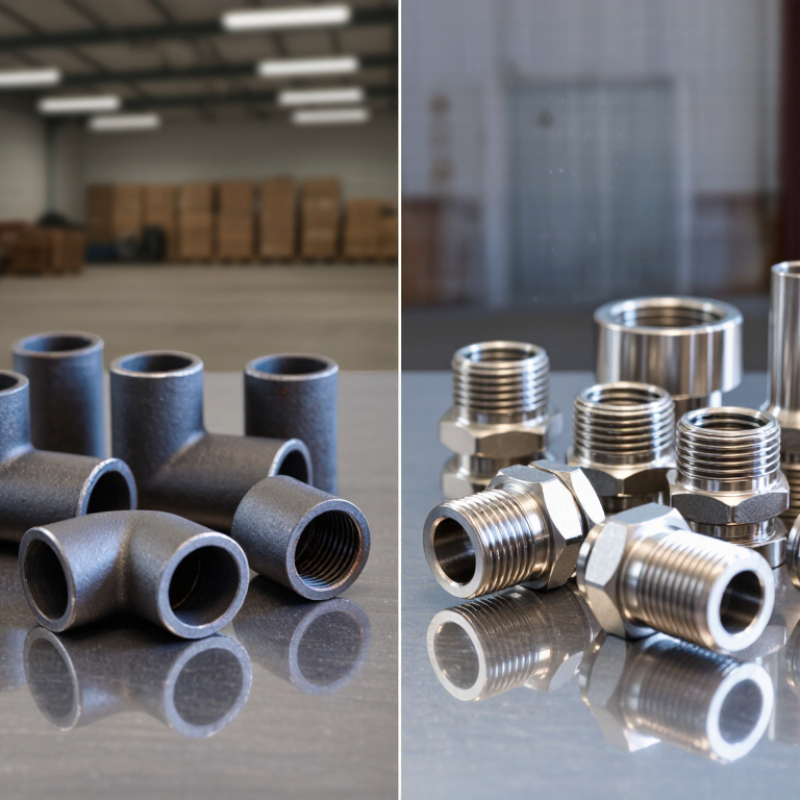
Steel and stainless steel fittings are components that connect, redirect, or control piping systems. Elbows change flow direction, tees create branches, and couplings join pipe sections. “Steel” usually means carbon steel, while stainless steel contains chromium for improved corrosion resistance. That difference affects service life, maintenance, and cost.
Carbon steel fittings are strong and practical for structural lines, compressed air, oil, and many indoor systems. However, moisture can produce rust, especially around threads and uncoated surfaces. Stainless steel fittings perform better in humid, sanitary, or chemically demanding environments. Their chromium-rich surface can resist corrosion, but it is not invincible. Chlorides, poor cleaning, and contamination from ordinary steel tools may still cause problems. The choice is not always obvious.
Tips: Match the fitting material with the pipe, fluid, temperature, and pressure rating. Check threads, weld ends, and sealing surfaces before installation. A common site mistake is choosing stainless steel for everything, then ignoring crevice corrosion or incorrect assembly. Another is using carbon steel where condensation remains trapped. Examine the actual environment, not just the product label. When specifications seem unclear, confirm them with a qualified engineer and current technical standards. Small details matter.
Steel and stainless steel fittings differ mainly in chemistry, corrosion behavior, and service demands. Carbon steel fittings are primarily iron and carbon, while stainless steel requires at least 10.5% chromium under ISO 15510. Chromium forms a thin passive oxide film, which can repair itself in oxygen-rich conditions. That protection is not permanent. Chlorides, stagnant water, and poor cleaning can trigger pitting.
The International Stainless Steel Forum reported about 58.4 million tonnes of stainless steel production in 2023.
The World Steel Association reported roughly 1.89 billion tonnes of crude steel production that year.
These figures show scale, not automatic suitability. Carbon steel often offers higher thermal conductivity and lower purchase cost. Stainless steel usually provides better resistance to moisture, food acids, and many chemicals. Molybdenum-bearing grades perform better in chloride environments, but they still require correct design.
Fitting standards matter more than appearance. ASME B16.9 controls dimensions for many factory-made butt-welding fittings, while ASTM A234 and A403 cover common steel and stainless material specifications. Check pressure, temperature, wall thickness, welding method, and fluid composition. A shiny surface proves little. Magnetic behavior also cannot identify every stainless grade. In practice, an uncoated carbon steel elbow may rust quickly near a cooling tower, while stainless can suffer crevice corrosion under a gasket.
The overlooked detail is installation. Mixed-metal joints may create galvanic corrosion, especially with wet insulation. Low cost is tempting, but replacement access may be the real expense.
Carbon steel fittings suit dry, indoor, and mechanically demanding systems. They are common in structural frames, compressed-air lines, heating circuits, and general industrial piping. Their strength-to-cost ratio remains attractive. The NACE IMPACT study estimated global corrosion costs at about $2.5 trillion annually, or 3.4% of global GDP. That figure makes surface protection more than a cosmetic choice. Paint, coating, drainage, and inspection can extend service life. Still, carbon steel can rust quickly around condensation, salts, and untreated water.
Stainless steel fittings perform better where cleanliness and corrosion resistance matter. Food-processing lines, pharmaceutical utilities, coastal equipment, potable-water systems, and chemical service often need stainless grades. The World Stainless Association reported approximately 58.4 million tonnes of stainless crude steel production in 2023. Demand reflects broad use, but stainless is not automatically suitable for every chemical. Chlorides can cause pitting, especially at higher temperatures. Grade selection, welding quality, and crevice control remain critical. A polished surface alone cannot repair poor design.
Choose carbon steel for controlled environments and protected systems. Choose stainless steel when maintenance access is limited or contamination carries a high cost. Check pressure ratings against ASME B16.9 or ASME B16.11, and confirm material requirements through applicable ASTM specifications. I would not decide from purchase price alone. Installation, coating, inspection, and replacement costs can change the result. The boundary is not always clean. A mixed system may work, but galvanic corrosion needs proper isolation and engineering review.
Cost, maintenance, and service life often matter more than the initial purchase price. Carbon steel fittings usually cost less, especially for large industrial networks. However, they need protective coatings, controlled humidity, or regular repainting. A scratched coating can expose bright metal to moisture, rust, and leakage risks. The NACE IMPACT Study estimated global corrosion costs at 2.5 trillion dollars annually, equal to about 3.4% of global GDP in 2013. That figure shows why maintenance deserves serious attention.
Stainless steel forms a passive chromium-rich layer that can repair itself when oxygen is available. It generally performs better in wet rooms, food-processing areas, and outdoor pipework. Still, it is not corrosion-proof. Chlorides, poor welding, and trapped dirt can cause pitting. Field inspections often reveal this overlooked detail. Cleaning and correct installation remain necessary.
Think beyond the invoice.
A stainless fitting may reduce coating work and replacement frequency, but its higher purchase price can strain a small project budget. The International Stainless Steel Forum identifies stainless steel as fully recyclable, supporting long-term material value. Carbon steel remains practical in dry, accessible locations where inspection is easy. Stainless steel becomes more persuasive when downtime, contamination, or hidden pipework would be expensive. The weak point is often not the metal itself, but an optimistic maintenance plan.
Steel vs Stainless Steel Fittings: Which Should You Choose?
What Factors Should Guide Your Choice?
When selecting fittings, start with the fluid, not the price tag. Carbon steel fittings suit many dry, indoor systems and can handle demanding pressure. They usually cost less. However, moisture, salt, and cleaning chemicals can quickly attack an unprotected surface. Stainless steel resists corrosion better, especially in humid plants, food-processing areas, and outdoor pipework. It is not corrosion-proof. Chlorides can still cause pitting, particularly in stagnant water and narrow crevices.
Temperature and pressure ratings must match the complete assembly. Check the fitting material, wall thickness, thread type, and gasket compatibility. A fitting may look strong but fail when heat cycles loosen a joint. I have seen installation teams replace sound fittings because incompatible metals created galvanic corrosion. Isolation washers and correct joining methods can prevent that problem. Small details matter.
Think about maintenance and access, too. Painted steel may need inspection and recoating. Stainless steel often reduces surface maintenance, but its higher purchase price can strain a tight budget. Compare the full service cost, not only the invoice. Also review applicable engineering standards and obtain traceable material certificates for critical systems. I would not choose stainless steel automatically; sometimes it is unnecessary. Yet choosing cheap steel in a wet, salty environment can become an expensive lesson.
| Selection Factor | Carbon Steel Fittings | Stainless Steel Fittings | Practical Guidance |
|---|---|---|---|
| Base Material | Iron-based steel containing carbon, typically with a carbon content up to about 2.1% by mass. It is commonly protected with paint, coating, plating, or a corrosion-inhibiting treatment. | Steel containing at least approximately 10.5% chromium, which forms a thin passive oxide layer that helps protect the surface from corrosion. Common grades include austenitic and ferritic stainless steels. | Choose based on the fluid, environment, temperature, pressure, and required service life rather than material price alone. |
| Corrosion Resistance | Good resistance in dry, controlled, or non-corrosive environments when correctly coated. Unprotected surfaces can rust when exposed to water, oxygen, salts, or high humidity. | Generally provides much better resistance to atmospheric moisture, many chemicals, and process fluids. Resistance varies significantly by grade and exposure conditions. | Stainless steel preferred for coastal, humid, hygienic, chemical, or frequently washed environments. Verify compatibility with chlorides and acids. |
| Strength and Pressure Capability | Offers high strength and is widely used for pressurized piping. Its allowable pressure depends on the fitting design, wall thickness, temperature, grade, and applicable standard. | Provides strong mechanical performance, but strength differs by grade and condition. Some stainless grades offer higher yield strength than common carbon steels, while others may be more ductile. | Compare the actual pressure-temperature rating and material specification for the fitting; do not select by material name alone. |
| High-Temperature Service | Can perform well at elevated temperatures, but strength, oxidation resistance, and allowable stress decrease as temperature rises. External scale and corrosion may become concerns. | Many grades maintain useful oxidation and corrosion resistance at elevated temperatures, although thermal expansion and grade-specific limits must be considered. | For hot service, use the design code’s allowable stresses and temperature limits for the exact grade and fitting class. |
| Low-Temperature Service | Some carbon steels can become brittle at low temperatures. Impact toughness and a suitable low-temperature grade may be required. | Many austenitic stainless steels retain good toughness at cryogenic and low temperatures, while ferritic and martensitic grades require more careful evaluation. | Stainless steel often preferred for low-temperature systems, but confirm impact, toughness, and code requirements for the selected grade. |
| Cost | Usually has a lower initial purchase cost and broad availability. Additional expenses may include coating, painting, inspection, replacement, and corrosion control. | Usually costs more initially because of alloying elements and manufacturing requirements. Its longer service life can reduce maintenance and replacement costs. | Use total lifecycle cost: purchase, installation, coating, inspection, cleaning, downtime, replacement, and disposal. |
| Maintenance Requirements | May require periodic inspection, repainting, coating repair, moisture control, and corrosion-thickness monitoring. | Usually requires less protective coating maintenance, but should still be cleaned properly and inspected for pitting, crevice corrosion, and contamination. | Select stainless steel where access is difficult or maintenance interruptions are expensive. |
| Hygiene and Cleanability | Rust, surface scale, and coating damage can make it unsuitable for many hygienic applications unless specially designed and protected. | Smooth, cleanable surfaces and good corrosion resistance make it widely used in food, beverage, pharmaceutical, and sanitary processing systems. | Stainless steel preferred where cleanliness, frequent washdown, and product purity are critical. |
| Weldability and Fabrication | Generally straightforward to weld and fabricate, with established procedures and widely available welding consumables. | Can be welded successfully, but heat input, shielding, interpass cleaning, distortion, and contamination control are important. Certain grades may require post-weld treatment. | Use qualified welding procedures and keep stainless tools and work areas free from carbon-steel contamination. |
| Galvanic Corrosion | Can corrode faster when directly connected to a more noble metal, especially in the presence of an electrolyte such as salt water or condensate. | Can accelerate corrosion of less noble metals when electrically connected in a conductive environment. | Check material combinations and use suitable isolation, gaskets, coatings, or compatible transition fittings where required. |
| Magnetic Behavior | Normally magnetic because of their ferritic or pearlitic structure. | Depends on grade and processing. Austenitic grades are generally non-magnetic in the annealed condition but may become slightly magnetic after cold working; ferritic and martensitic grades are magnetic. | Do not use a magnet test as the sole method of identifying stainless steel grade or quality. |
| Common Applications |
|
|
Match the fitting material with the process fluid, external atmosphere, cleaning chemicals, and regulatory requirements. |
| Environmental Impact and Service Life | Steel is recyclable, but corrosion can shorten service life and increase coating, replacement, and waste requirements. | Highly recyclable and often provides a longer service life in corrosive conditions, which can reduce replacement frequency. | Consider durability and lifecycle emissions alongside initial material cost. |
| Best Overall Choice | A practical choice for cost-sensitive systems in non-corrosive or well-controlled environments where regular protection and maintenance are acceptable. | A practical choice for corrosive, hygienic, outdoor, low-maintenance, or long-life installations where higher initial cost is justified. | Choose carbon steel for economical, controlled environments; choose stainless steel when corrosion resistance, cleanliness, or lifecycle performance is the priority. |
Steel usually means carbon steel. Stainless steel contains chromium, which improves corrosion resistance. The difference affects cost, maintenance, and service life.
They suit dry indoor systems, structural lines, compressed-air piping, and heating circuits. They offer strong performance at a lower purchase cost. Keep moisture away.
They suit humid, sanitary, coastal, and chemically demanding environments. Food-processing and potable-water systems may require cleaner, more corrosion-resistant materials. The exact grade still matters.
Yes. Chlorides, trapped moisture, poor cleaning, and contamination can cause pitting or crevice corrosion. Stainless steel is resistant, not invincible.
Check the pipe material, fluid, temperature, pressure, threads, weld ends, and sealing surfaces. Examine the real environment. Product labels can hide important details.
Not necessarily. Coating, drainage, inspection, replacement, and labor can increase long-term costs. A cheap fitting may become expensive beside constant condensation.
They can work in some systems, but galvanic corrosion may occur. Proper isolation and engineering review are important. Mixed materials need careful planning.
Trapped condensation, unprotected surfaces, incorrect assembly, and contaminated stainless steel tools are common mistakes. Small details matter. I might overlook them too.
Use suitable paint or coating, provide drainage, and inspect vulnerable areas regularly. Threads and uncoated surfaces deserve special attention. Rust often starts there.
No. Consider maintenance access, contamination risk, installation quality, and expected service life. Confirm unclear specifications with a qualified engineer and current technical requirements.
Steel and stainless steel fittings are essential components used to connect, control, and direct piping systems, but their material properties make them suitable for different environments. Steel fittings are generally strong, economical, and appropriate for many standard industrial, construction, and low-corrosion applications. Stainless steel fittings contain chromium, which provides improved resistance to rust, oxidation, moisture, chemicals, and high temperatures, making them a better option for demanding or hygienic settings.
When deciding how to choose between steel and stainless steel fittings, consider the operating environment, pressure and temperature requirements, exposure to moisture or corrosive substances, expected service life, and available budget. Steel may offer lower initial costs and can perform reliably with suitable protective coatings and regular maintenance. Stainless steel usually costs more, but it often requires less maintenance and provides greater long-term durability in harsh conditions. The best choice balances performance, maintenance needs, installation requirements, and the total cost over the fitting’s expected lifespan.

Jefort Hardware