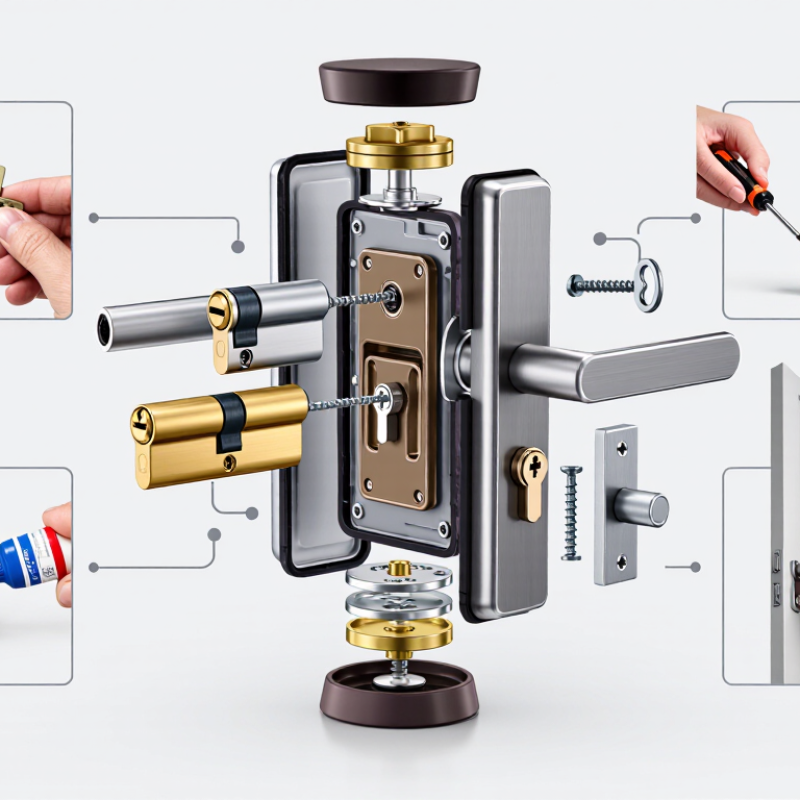
| Key and keyway |
Repeated friction, bent or worn keys, dirt, and use of an incorrect key |
Photograph the keyway; note whether the key inserts fully and turns smoothly without force |
Sticking, rough turning, visible key damage, or metal shavings |
Every 6 months; sooner in high-use locations |
Use an undamaged key, avoid forcing it, and keep the keyway free of debris. Use only lubricant suitable for the lock type. |
| Lock cylinder and plug |
Dust, corrosion, excessive torque, or repeated operation under door pressure |
Record the number of turns, smoothness of operation, and whether the cylinder face sits flush with the door |
Binding, unusual looseness, intermittent operation, or a cylinder that shifts in the door |
Every 6 months |
Check that the door and strike are aligned before turning the key. Keep mounting hardware secure and avoid heavy keychains that pull on the cylinder. |
| Deadbolt or latch bolt |
Misalignment with the strike plate, dirt buildup, and wear from repeated cycling |
Measure how far the bolt extends; note whether it moves freely and enters the strike opening without pushing or lifting the door |
Scraping, incomplete extension, delayed retraction, or a bolt that catches on the strike |
Every 3–6 months |
Correct door-to-frame alignment, keep the bolt clean, and tighten loose mounting screws. Do not use the key to force a bolt past a misaligned strike. |
| Strike plate and frame screws |
Loose screws, repeated impact, frame movement, or a strike opening that is too small |
Record screw condition, plate position, and whether the bolt enters the opening cleanly with the door closed |
Loose or missing screws, fresh rub marks, a shifting plate, or chipped wood around the opening |
Every 6 months and after door adjustments |
Use correctly sized, secure screws and keep the strike aligned with the bolt. Repair damaged frame material rather than repeatedly tightening into stripped holes. |
| Spindle, tailpiece, and connecting parts |
Loose handles, poor alignment, frequent operation, or worn internal connections |
Note handle play, ease of operation, and whether the inside and outside controls engage the latch consistently |
Excessive handle movement, rattling, slipping, or a handle that fails to retract the latch |
Every 6 months |
Keep fasteners secure and avoid using the handle to pull or support body weight. Have worn or damaged connecting parts inspected promptly. |
| Return spring and latch mechanism |
Fatigue from repeated use, contamination, corrosion, or a mechanism under constant strain |
Record whether the latch retracts and returns fully after each handle movement |
Slow return, a handle that stays down, incomplete latching, or inconsistent movement |
Every 3–6 months |
Keep the latch area clean and ensure the door closes without binding. Replace damaged internal parts rather than compensating with extra force. |
| Mounting screws and through-bolts |
Vibration, repeated use, door movement, or installation hardware loosening over time |
Record whether hardware is present, secure, and seated evenly without distorting the lock body |
Visible gaps, wobbling, protruding screw heads, or changing alignment |
Every 6 months |
Check fasteners periodically and tighten carefully. Avoid overtightening, which can bind the mechanism or damage the door surface. |
| Door, hinges, and frame alignment |
Seasonal expansion, sagging hinges, loose hinge screws, or movement of the frame |
Record door clearance, closing effort, and whether the bolt aligns with the strike when the door is shut |
Rubbing, a door that drops or springs back, changing gaps, or a lock that works only when the door is pushed |
Every 6 months and when operation changes |
Maintain hinges and correct door alignment before adjusting the lock. A properly aligned door reduces unnecessary stress on the bolt and cylinder. |
 Jefort Hardware